
Note from the Editor-in Chief: This is part two of a three-part series about the current state of science at Misericordia and other colleges and universities in America. Part one is broad focus on a national level and how it trickles down to universities across the country, part two highlights research being conducted at Misericordia and Part three will be a student perspective from students who are currently conducting scientific research.
As the Trump administration has significantly cut federal funding for many basic scientific and medical research grants at major universities across the country and the threat of future cuts still loom, current and prospective students who are interested in doing research at the collegiate, and perhaps eventually the professional level, may find smaller institutions like Misericordia, which don’t heavily rely on direct federal funding, more appealing.
While Misericordia does not receive a lot of federal funding for research grants, it is still a major player in the research space, conducting important, and even groundbreaking, research in a wide variety of areas.
For students interested in research, there are numerous advantages in attending an institution that doesn’t rely on federal funding, the most obvious being that Misericordia and other smaller research institutions like it remain largely unaffected by the current federal grant cuts. However, as a feeder school for students who go on to conduct research at larger federally funded research institutions, students currently conducting research at Misericordia may be indirectly affected in the long term, as funds may dry up for grants at the major universities they move on to.
Unlike the major federally funded research universities across the country that are scrambling to assess the damage these grant cuts will have on their research programs short and long term, Misericordia’s research programs are receiving an increase in funding.
According to Dr. Jennifer Black, Associate Professor of History and the Director of the Summer Undergraduate Research Fellowship (SURF) program, the increase in funds shows that research at Misericordia is more than just stable; it’s expanding.
“Bigger schools will be dependent on federal funding from the National Science Foundation or the National Institutes of Health, but our program is largely funded internally, with some support from the PNC Foundation and the Willary Foundation. These local foundations have made it possible for us to continue supporting the program and to grow it this year, with more equitable stipends for students,” said Black.
According to Black, what makes the SURF program unique is the variety of research topics students can apply for.
“One of the things that makes our program different from other universities is that it is open to all students in all majors. Many other bigger schools will only have research opportunities available for students in the sciences or health sciences,” Black said.
Black is proud of both the past and the present research studies by students and faculty.
“We are doing some very exciting work in these projects. Our SURF students in the past few years have helped to identify invasive species and their impacts on local water sheds, the impact of micro plastics on the body, nerve cells, placenta cells, research into new speech disorders and many other topics,” said Black.
The opportunity to conduct research at the undergraduate level is another major advantage students at Misericordia have over students at larger institutions. Many larger federally funded research universities only have research opportunities for graduate students.
According to Dr. Linda Auker, Associate Professor of Biology and Program Director of Environmental Studies, Misericordia undergraduate students conducting research are receiving the full graduate-level experience.
“You almost get the graduate student experience in a way that you’re working kind of one-on-one with a faculty member. That faculty member is training you. There might be other students to help you out, but, you know, for me, the graduate student experience was going to my faculty member or my major professor and saying, ‘I want to do research,’ and you sit down, have a one-on-one conversation with that research looks like. That’s what you get here at the undergraduate level,” Auker said.
Cody Palubinsky, who just recently graduated from Misericordia with a bachelor’s degree in psychology and has plans to have a career in neuroscience, is currently pursuing a second bachelor’s degree at Misericordia. Palubinsky was specifically drawn to the idea of conducting research while pursuing his second undergraduate degree.
“In fact, part of the reason I came back here in particular was due to the fact of having the SURF program and having research be so accessible. It’s not really that there wasn’t competition, but more so that you get more one-on-one time with the professors and you can kind of figure out who is better positioned to align with your interests in a research sense,” Palubinsky said.
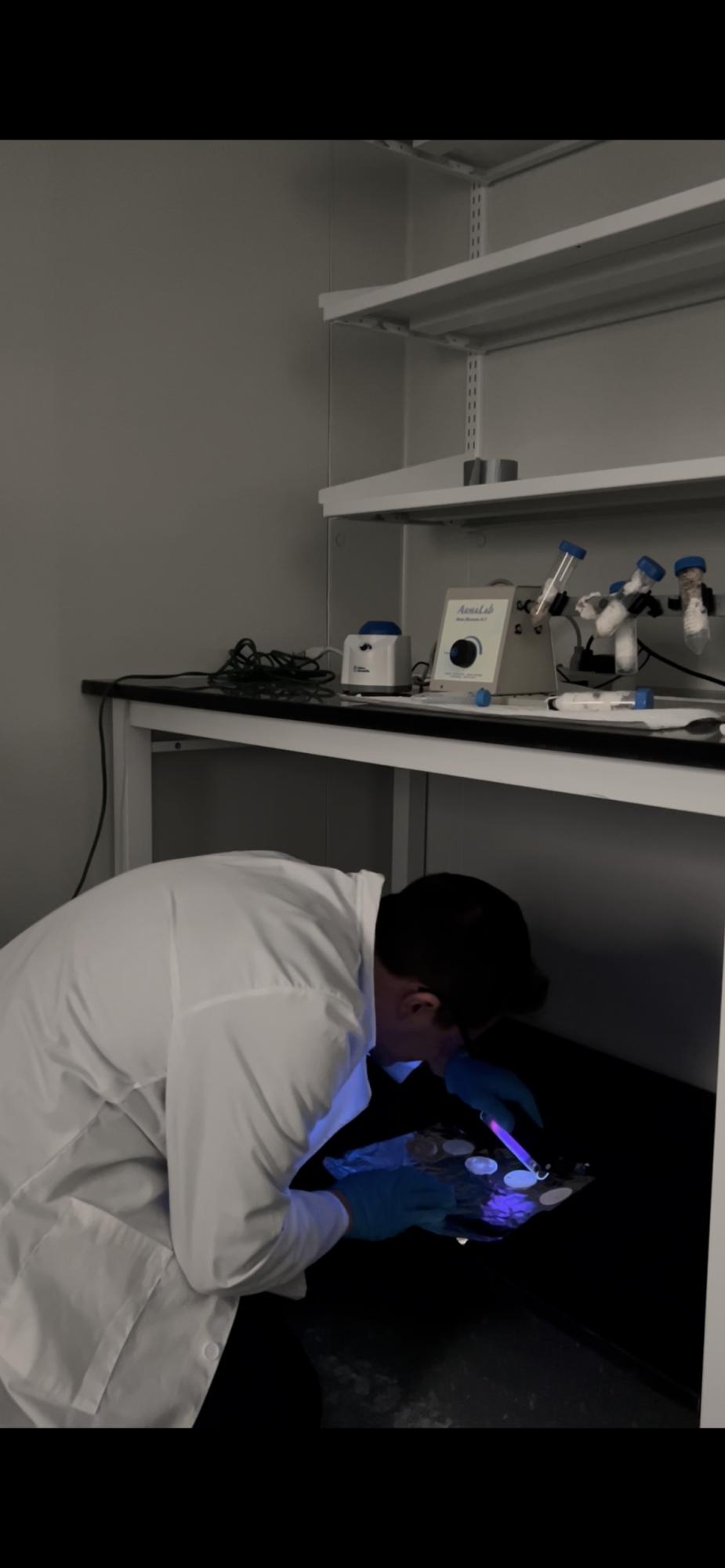
Palubinsky, under the supervision of Auker, is one of the students who is doing important research on microplastics in the environment and their effect on the body. Palubinsky agrees with Auker’s assessment of getting a graduate-level research experience as an undergraduate student.
“A lot of what has happened, actually early on, it was a lot of identification, but as it’s going on, it’s getting more into the methods that she’s teaching, and being able to show me [those methods] as time goes on is actually helping me focus kind of outside of my comfort area and get better in areas that I would never really think about working on in a laboratory. Like, as I mentioned, I wanted to go into neuroscience and I still plan on it, but having this extra experience in a different field, I think, will help me in the long run,” Palubinsky said.
Auker feels another advantage in not having to rely on federal grants is that it allows her students to approach research as somewhat of a blank canvas.
“I tell students, and it’s going to vary professor to professor, but in my lab, I tell students, ‘Hey, as long as it’s kind of under my umbrella and it’s feasible, let’s try it.’ So, I’ve had students do all kinds of stuff. You know, this is like one of the few opportunities they’ll get to just try stuff and see if it works or see if it doesn’t. And that’s kind of, to be honest, kind of the nice thing about not being nailed down by a ton of federal grants because you can do that,” Auker said.
Palubinsky’s current research is focused on collecting samples from crayfish in Harvey’s creek and testing their exposure to microplastics, and how that can directly correlate to human exposure.
“So, what we’ve been doing is we’ve been collecting samples, and we’ve been splitting them in half and testing half of them for microplastic samples and saving half of them for glutathione samples. Glutathione is essentially just an antioxidant biomarker within the liver, or in this case, the hepatopancreas,” Palubinsky said.

Palubinsky said unusually high levels of glutathione can indicate a lot of stress on the body, while unusually low levels of glutathione can point to stress occurring for a long period of time.
“So, we were just collecting samples and testing water quality and sediment samples to determine levels of microplastics and seeing if there’s a correlation between that and possible disruption within liver function,” Palubinsky said.
Palubinsky’s research is certainly important for ecological and environmental impact, but it is also relevant to public safety.
“So, with microplastics, they’re small enough that they can breach the blood-brain barrier, so they can get into essentially any pathway within the body. Say we unknowingly handle however so many microplastics a day. That could quickly lead to possible breakdowns in the pathways. And glutathione was chosen as it’s a very common kind of antioxidant throughout many animal species. So, with those levels being lower, it kind of shows that if they’re lower, we have less immune function. So, we’re more susceptible to either getting sick or possibly getting a disease,” said Palubinsky.
Auker echoed the concern with microplastics and public safety, alluding to potential contamination in waterways and through food packaging. According to Auker, microplastics can disrupt the human microbiome, a collection of microorganisms that play roles in digestive health and the immune system. Auker said microplastics, “getting into your food and getting into the streams you’re going to be in and your dogs are going into,” is concerning.
While the current microplastic research being conducted at Misericordia may not quite be considered groundbreaking, it is certainly considered to be relatively new.
“I don’t know about groundbreaking, but I know with microplastics, a lot of this stuff, like nobody has come up with a good protocol for figuring out how to measure microplastics. So, I don’t know if we’re groundbreaking, but we’re certainly kind of at the forefront with everyone else trying to figure this out,” Auker said.
In the University’s speech-language pathology department, some of the research conducted is considered trailblazing, particularly some very cutting-edge technology and how it is applied.
Ava Laukaitis, a junior speech-language pathology major, presented her research, along with other speech pathology students, at the 14th annual Stuttering and Cluttering Conference in Oxford, England in Sept. Laukaitis is currently involved in multiple research studies, but her main focus is on using virtual reality for stuttering therapy.
“So, our primary research right now is on virtual reality and its application to stuttering therapy. So, we have a virtual reality program and we’re looking at how participants react physically when they’re under VR in different scenarios. So, we look at things like how high their heart rate is, their respiration rate, their sweatiness of their hands, and we see whether that changes across virtual reality scenarios,” said Laukaitis.
Like Palubinsky, a major reason Laukaitis was drawn to Misericordia is the opportunity to do undergraduate research, and she also believes she is getting the one-on-one experience students get in graduate school.
“I think that was one of the reasons I wanted to come here was because of the research opportunities here. There aren’t a lot of undergrad programs that have research in speech language pathology. I think we’re kind of groundbreaking in that we have a lot of research opportunities for undergrads. I’m only a junior. I’m not a grad student, but I’ve been to national, international, [and] state conferences… I want to pursue my PhD, and the only reason I want to pursue it and the only reason I think I might be able to is because of the foundation that I’ve had here with what Dr. Tellis has provided,” said Laukaitis.
According to Dr. Glenn Tellis, Professor of Speech-Language Pathology and Department Chair, the department is also using Kebbi, an AI powered robot, for social assistance with speech pathology patients and even elderly care.
“In schools and speech-language therapy, Kebbi is often used to support social communication, model emotions, guide articulation or language drills, promote turn-taking, and increase engagement—especially for autistic learners or children who respond well to predictable, animated interactions. Beyond SLP, Kebbi assists with classroom teaching, cognitive training, eldercare routines, and even simple hospitality tasks like greeting visitors,” Tellis said.
Laukaitis said the application of Kebbi and VR is particularly innovative. Laukaitis doesn’t use Kebbi for her current research, but she has used it in other situations.
“I’m not on that research team, but I do run Kebbi, the socially assistive robot for a different clinic. So, that’s pretty groundbreaking. They’re using that for research. Not just autism, but generally, like language, articulation, working with kids and having a robot there. It’s kind of a newer thing. The virtual reality stuff is on the newer end of things. Most clinics are not using this in a clinical sense. It’s a lot of research stuff that’s being used with the VR. So, we’re one of the only clinics that’s using it for clinical practice right now,” Laukaitis said.
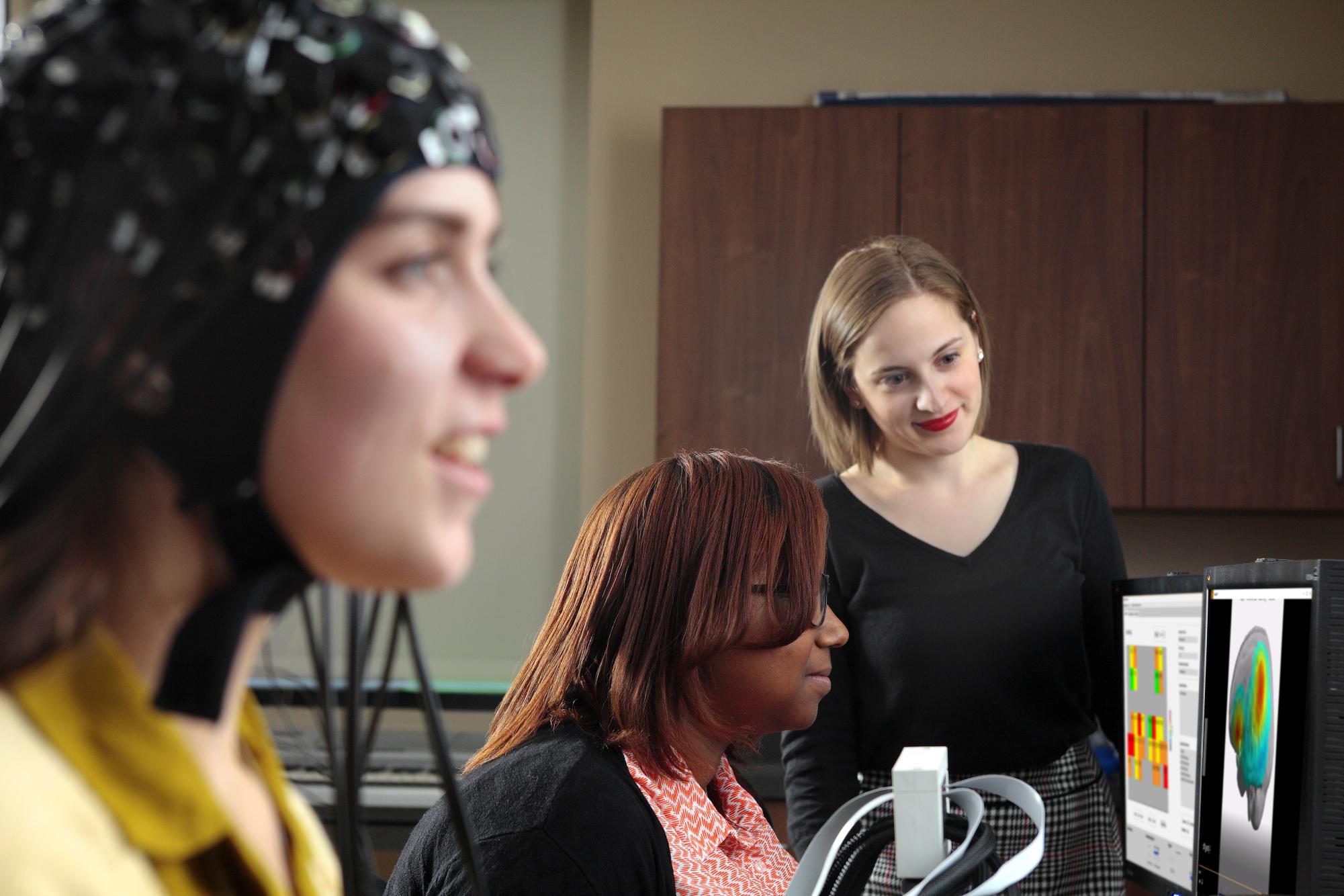
The University is also on the forefront of another cutting-edge technology called Functional Near-Infrared Spectroscopy, which is a non-invasive brain imaging technology that uses uses near-infrared light to measure changes in oxygenated and deoxygenated hemoglobin in the cerebral cortex, providing a window into real-time neural activity.
According to Tellis, FNIRS is particularly beneficial in speech pathology.
“NIRx systems, such as NIRScout and NIRSport, use lightweight caps with optical sensors to record cortical responses while individuals perform tasks like speech perception, language processing, or listening in noise. In speech-language pathology, FNIRS is valuable because it is silent, portable, and more tolerant of movement than MRI, making it suitable for infants, children, and individuals with hearing devices such as cochlear implants,” said Tellis.
Even though FNIRS has become popular in recent years, Misericordia was one of the first to use it for speech pathology.
“We do a lot with FNIRS. That has, in recent years, really boosted in popularity within speech language pathology, but it’s still on the newer end of things. And our university years ago was kind of on the groundbreaking end of using FNIRs for speech language pathology,” said Laukaitis.
The department is also using a cutting-edge virtual dissection table.
“The Anatomage Virtual Dissection Table is a life-size, interactive touchscreen table that functions as a high-tech digital cadaver for anatomy education and clinical training. It displays full-body 3D models created from real human cadaver scans, allowing users to rotate, dissect, slice, and explore anatomical structures with exceptional detail,” Tellis said.
Auker still believes students should consider scientific research, even with the cuts. It might just take a little creativity.
“I mean, definitely do it, right? Do science. We need more scientists. Probably the best way to figure [it] out [is] kind of what field [to consider], because different fields are going to be impacted differently by the cuts. There’s a lot of really creative ways to do science without relying on federal grants,” Auker said.
To learn more about the SURF program and how to apply for research studies, visit https://www.misericordia.edu/academics/vice-president-of-academic-affairs/summer-undergraduate-research-fellowship