

Note from the Editor-in Chief: This is part 1 of a three-part series about the current state of science at Misericordia and other colleges and universities in America. Part 1 is broad focus on a national level and how it trickles down to universities across the country, part 2 will highlight research being conducted at Misericordia and Part 3 will be a student perspective from MU students who are currently conducting scientific research.
Many universities across the country that receive federal funding from the National Institutes of Health for basic scientific and medical research are scrambling to restore congressionally approved funds that were abruptly frozen by the White House, but here at Misericordia, it’s the students who plan to move on to doctoral programs at larger institutions who are the most affected.
According to Dr. Glen Tellis, Professor and Chair of the Speech-Language Pathology Department, the university is not directly affected by the research grant terminations because the vast majority of Misericordia’s research funding comes from sources outside of the federal government, but it will be affected because of its research collaboration with larger schools and due to Misericordia serving as a pipeline to doctoral programs at these schools.
“So, on the federal level, if I were at University of Pittsburgh or Harvard or one of these schools, I mean, the amount of federal grants that the NIH [terminated], those get affected more. A school like ours is indirectly affected because we have a lot of foundation grants and corporate grants, but in the big grand scheme of things, when these students are going on to these big research-funded schools [it provides] a pipeline of getting students up. So, traditionally, many of these small schools are feeder programs to the big Ph.D. programs,” Tellis said.
Pennsylvania will be affected far more than many other states because of the massive amount of federal funds it receives for medical research at universities across the state. In fiscal year 2024, Pennsylvania received a total of $1.8 billion in NIH grants, which is the fourth most in the country. Students at Misericordia and other smaller schools across the state who plan to go into basic scientific and medical research may have less money to work with at the larger institutions they move to.
Marc Smolonsky, who agreed to be interviewed by The Highlander for this story, has held various positions with both the Department of Health and Human Services and the NIH for 20 years, including Senior Policy Advisor to the Secretary of HHS, NIH Legislative Director, and a return to HHS as Associate Deputy Secretary, a role that essentially left him third in charge.
Smolonsky retired from the federal government in 2014, but he is in contact with many former colleagues who are employed in both departments, and he is plugged into the current situation regarding research grant cuts and is highly knowledgeable about the process by which NIH assigns research grants at the university level.
“The University of Pittsburgh Medical School is one of the largest recipients of medical research funds in the world. Carnegie Mellon also receives it. Pittsburgh is a hotbed, and so is Philadelphia. Philadelphia is University of Pennsylvania, Temple, and Jefferson Medical School,” Smolonsky said.
Smolonsky is concerned about how cuts will affect the state economy since the university system and medical research means so much to the state.
“It hurts the economy because the universities in Philadelphia and Pennsylvania are a large part of the state’s economy. If they’re not doing well, it’s going to hurt the entire area. Also, in the middle of Pennsylvania, Hershey. Hershey is a hotbed of medical research. That surely affects any science student or anyone who wants to consider doing scientific or medical research in Pennsylvania at Misericordia. Those opportunities dry up,” said Smolonsky.
According to WHYY, the National Public Radio station in Philadelphia, Trump’s NIH terminations have already taken $100 million out of the state’s economy.
Tellis is concerned about the grant cuts at larger institutions not only affecting the pipeline of students going on to prestigious doctoral programs at bigger schools, but also their effect on America’s status as a worldwide leader in scientific research.
“Well, for me, indirectly, we in America are going to be in a crisis down the line because if your feeder programs are sending people, and there’s no funding up there, what happens to America in terms of being the leaders in research? Look at research in the in the 40s and 50s, I’m talking about World War II and the Manhattan Project and moving down to the Cold War, et cetera, a large amount of money was poured into basic research,” Tellis said.
Exactly one week after President Trump was inaugurated for his second term, he signed an executive order that significantly cut Diversity, Equity and Inclusion funding across the federal government, which resulted in the of freezing of an estimated $8 billion in congressionally appropriated funds for the NIH and terminated roughly 1800 research grants, causing a panic for many basic scientific and medical researchers, and healthcare professionals.
Those numbers were reported by a research team at the Harvard Medical School, and they have been widely adopted by those in journalism and academia. Researchers at the HHS estimate the numbers may actually be higher and more impactful. According to an open letter drafted and signed by employees of HHS and NIH addressed to NIH Director Dr. Jay Bhattacharya, 2100 research grants were terminated totaling $9.5 billion and $2.6 billion in contracts.
NIH, which is a branch of HHS, is located up the road from the White House, with its primary office in Bethesda, MD, and it is the largest public funder of biomedical research in the world. The letter, which was self-titled “The Bethesda Doctrine,” laid out the many reasons why these particular employees chose to dissent from Bhattachara’s grant terminations, which were under the direct orders of the Trump Administration.
The concerns mentioned in the letter include employees being forced to “politicize research by halting high-quality, peer reviewed grants and contracts,” which the letter claims impacts research on Covid-19 and other vaccine development. It also mentions the negative impacts the terminations have on research about the health effects of climate change, and the “broad participation in biomedical research.” The letter also highlights the possibility to “interrupt global collaboration,” and “undermine peer review.”
Some of the longstanding grants have been reinstated by court orders or are currently being challenged in federal court, but a significant number are still considered terminated.
“I don’t know all of the details, but my understanding is that most research that has been cut or canceled has not been subjected to court issues. The ones that have been subject [to court cases] are longstanding research, like an ongoing cancer program at Harvard or something like that, but my understanding is that the amount of research that is being conducted this year has been cut in half,” Smolonsky said.
Harvard had $2 billion in federal funding for research frozen during the initial grant terminations, but on Sept. 3, a federal judge ordered the funding freeze unlawful and ordered the funds be unfrozen and made available to Harvard. A similar ruling took place on Sept. 22 when a federal judge ruled to restore $500 million in research grants to UCLA.
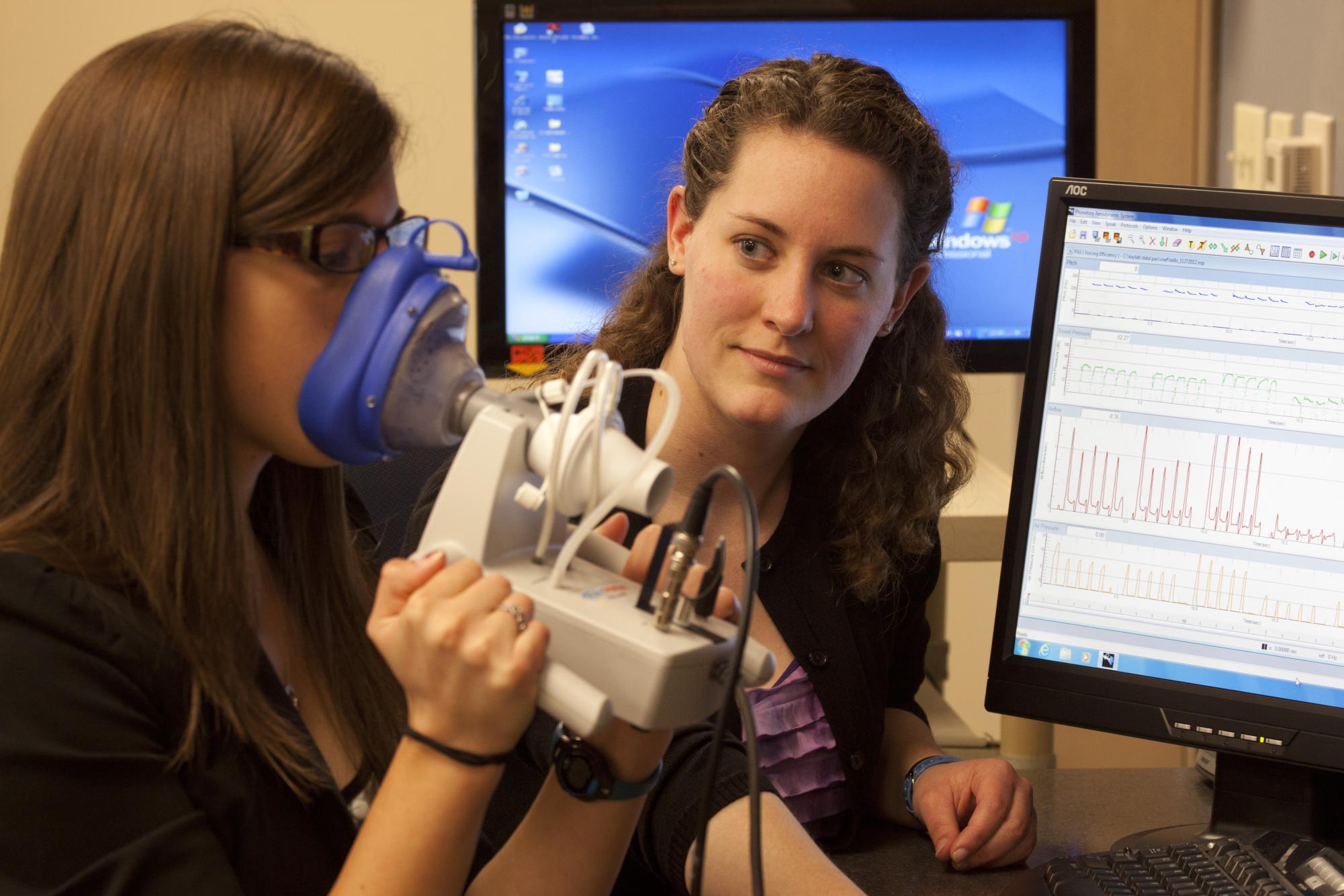
Jeanette Perucca. Photo courtesy of the Department of Speech-Pathology.
Plenty of other universities are dealing with federal research grant freezes or are fighting to get them reinstated in court. Most of the research money that the NIH allocates for research is at the university level.
“Approximately 85% of all the funds appropriated for NIH are not spent by federal employees. 85% of NIH’s budget goes to academic research centers. So, when research is being cut, it’s not being cut right there on the NIH campus. It’s being cut at medical schools, and the significance of that is medical research was designed under the Public Health Service Act to be conducted mainly by academic research centers,” Smolonsky said.
Smolonsky believes this fact dispels any argument that federal employees are compromised.
“That was the design. It was not supposed to be conducted by federal employees. So, all this stuff about federal employees being compromised is nonsense because most of the research is going to non-federal employees at academic health centers,” said Smolonsky.
Like many of his former colleagues, and current and former employees who signed the “The Bethesda Doctrine,” Smolonsky is extremely concerned about the impact on the peer review process, which is a critical step in any academic research, but particularly in basic scientific and medical research.
“Those academic health centers are competing for funds with others. Seventy percent to 75% of all research that passes muster that’s considered good research that’s been peer reviewed is not funded. [NIH] only funds about 15% of the best research, and it’s peer reviewed. The decisions are not made by the federal government. The decisions are made by peer reviewers. So, not only have they cut everything, they’ve eliminated the peer review process,” Smolonsky said.
Smolonsky feels a threat to the peer review process could have drastic consequences in scientific and medical research fields.
“There’s no objectivity to the research that’s being conducted anymore. So, it’s a double whammy. They have essentially, in a couple of months, destroyed a half-century of medical research standards,” Smolonsky said.
The National Cancer Institute receives its funding from NIH, and it is the largest funder of cancer research in the world. According to the NCI website, the bulk of NCI’s budget goes to grants and cooperative agreements to “facilitate research conducted at universities, medical schools, hospitals, cancer centers, research laboratories, and private firms in the United States and abroad.”
The operating budget for NCI for 2025 is 7.22 billion, which is 15% of NIH’s total budget, and with NIH research grant terminations valued at north of $8 billion, Smolonsky is deeply concerned about impact of cancer research going forward.
The American Cancer Society shares Smolonsky’s concerns, particularly after President Trump proposed both a 37% budget cut to NCI and a $18 billion reduction in NIH’s budget for fiscal year 2026. NIH’s congressionally approved budget for fiscal year 2025 was roughly $47 billion. According to a press release from ACS, Trump’s proposed budget cuts would “put future cancer cures in jeopardy.”
Smolonsky feels even more strongly than the ACS does about the current grant termination and proposed budget cuts to NIH and NCI.
“That’s like giving a death sentence to cancer patients,” Smolonsky said.
Smolonsky also shares concerns regarding threats to vaccine research and the politicization of groundbreaking mRNA research.
“Let me just say two things, and this isn’t just my personal opinion. It’s the opinion of experts. Vaccines are the greatest scientific discovery in terms of saving lives in the history of humanity. Vaccines have done more to save lives than anything that has ever been done. Nothing else even comes close to it. The mRNA vaccine is the most successful and most effective vaccine ever developed, and they’ve decided not to pursue it, and the reason they decided not to pursue it is the mRNA vaccine was first widely used against COVID. It’s estimated conservatively that the mRNA vaccine saved 3 million lives in one year.”
The mRNA vaccine was discovered due to basic scientific research, and it allows vaccines to be produced in a lab at much faster rates than older non-mRNA vaccines, which had to be grown in eggs.
Basic scientific research is also threatened by grant terminations and Trump’s proposed budget cuts for fiscal year 2026. Basic scientific research has led to many other major advances in human history, including DNA and fingerprint analysis, antibiotics, electricity and nuclear energy.
Tellis is also concerned about cuts to basic scientific research.
“Well, America also has this mentality of, can do, we are entrepreneurs, we do stuff with our hands, we are creative, and in tandem with this basic research and the money pouring in to make your own companies, you have this Silicon Valley mentality. That’s what America still has going for it, and if you turn off the spigot, you know, and you don’t have that basic research coming in, that’s where the long-term effects [happen], regardless of which political side you stay on, that’s the reality of it,” Tellis said.
Tellis feels more optimistic about the future of scientific and medical research funding than Smolonsky does. Tellis predicts that federal funding will eventually resume to near normal levels and that is more of a temporary bump in the road rather than a dismantling of scientific research.
“They went after all the DEI programs, but they’re going to keep those science programs, and in the end, the money is going to come back. So, you’ll see in the end, business will continue as usual. That’s my prediction. But I may be wrong, but in certain ways, stem cell research may stop because there’s a political agenda. Cancer research with stem cells may stop, but cancer research with animal models may be good,” Tellis said.
Tellis’ prediction may already be coming to fruition. In addition to federal courts starting to unfreeze federal research grants for major universities, Congress, which is Republican controlled in both the House of Representatives and the Senate, has already rejected Trump’s proposal to cut NIH’s budget by 40% in fiscal year 2026.
The U.S. Constitution gives Congress the power to tax and gives it final say on the federal budget. Presidents often send budget proposals to Congress, but Congress can veto any presidential budget proposal. Once Congress rejects a president’s budget proposal, the president can’t veto that rejection. In 1996, when Bill Clinton was president, Congress passed the Line-Item Veto Act of 1996, which temporarily gave the president power to veto specific spending items, but it was struck down by the Supreme Courtin 1998 and declared unconstitutional.
Many college students who are considering careers in scientific research are watching what federal research funding will look in a few years, and Smolonsky has a stark warning for them.
“Unless things change, so there’s a big caveat. If things continue the way they’re going now, my advice to a college student going into science would be to choose another field or study overseas, because you have no future in America. Unless things change under this current administration, but not if they continue to go down this road. If you think about it, about half of the best scientists in America have lost their funding. I’m not talking about newbies. I’m talking about, you know, Nobel Prize winners,” Smolonsky said.
Tellis’ outlook for students looking at careers in science remains encouraging.
“I would say go for it. It’s really important that we encourage students. So, this is the tricky part, right? Because you’re looking at this doom and gloom, doomsday scenario, but Americans are also creative. There are certain places where DEI and other things, the federal government is going to pull every inch of money from there. But I think the basic science research will continue because the government, well, Americans are not fools. Whether you’re a Republican or a Democrat, they know where the bread is buttered,” said Tellis.