

Winter not only brings ice and snow, but it also can have a major impact on students’ activity levels and mental well-being. Struggles are common this time of year, perhaps especially with students’ motivation to attend classes.
“It makes me not want to go to class because I don’t want to go outside in the cold. It’s ugly outside, there’s no sun, and the sidewalks are not shoveled,” sophomore diagnostic medical sonography student Kayla Pardue said.
Pardue thinks that it is especially hard to go to 8 and 9 a.m. classes.
“The entire class, I’m just thinking about the fact that I have to walk out in the cold after,” she said.
Michael Peregrim, sophomore sports management major, feels the frigid weather discourages him from being active outside.
“I think it makes me less productive,” said Peregrim. “I really don’t want to go outside because I’m naturally just a more warm weather person. I like to be outside and be physically active.”
Assistant Professor of Marketing Greta Blake has noticed, as the semester moves further and as the weather gets colder, there are more absences in her classes.
“I’ve had a lot more absences, especially early. Usually people start out strong and then with all this cold, I’ve had a lot more people miss classes,” said Blake. “My 8 a.m. is where I’ve noticed it.”
Students say the energy around campus has cooled due to the snowy conditions and inability to enjoy the outside areas of campus.
“I think it’s miserable. Everybody just looks really sad. I could honestly, like, walk outside and it’s dead, like it looks like we’re an abandoned campus,” said Pardue.
Peregrim agrees with the atmosphere in that it almost seems depressing.
Emelyn Galvez, a professional mental health counselor, said it is common for students to experience symptoms of feeling less motivated, having low energy, being a little irritable and wanting to stay inside more.
“[That] doesn’t mean there’s something wrong with you. [Symptoms] are often connected to having less daylight, the cold weather, routines disrupted and increase of stress, so your midterms, finances,” Galvez said.
The funk can also be heavily related to adjusting to a new routine coming back after Christmas break and starting a new schedule.
Galvez said the increase of isolation due to the weather plays a part in low moods, too.
“For example, it’s been extremely cold where especially somebody who takes a walk to process or calm down, they can’t really take a walk,” she said.
Students may not want to leave their rooms or even their beds.
“I’d actually just rather be comfy taking a nap in my bed wrapped up in blankets because of the cold conditions outside,” said Pardue.
Cold conditions can also prevent students from spending time together with friends, going to the gym or attending campus activities.
“I’m less likely to do it because I don’t want to go outside and walk because it’s so cold and it’s windy and it’s just very inconvenient,” Pardue said.
However, Peregrim said his gym routine is why he can get out of bed and stay productive every day.
“That’s usually what I look forward to at the end of the day, like get your schoolwork done, get to the gym then just relax for the rest of the day or night,” Peregrim said.
Galvez feels students should keep a routine to combat the desire to isolate themselves in their rooms.
“If our routine gets disrupted, we are not able to kind of think the way we want to think, and we kind of start fluctuating a little bit,” she said.
Another factor contributing to lower moods: the decrease in daylight.
“It feels like bedtime at 6:30, and I just I feel naturally tired when it’s dark outside,” Peregrim said.
Blake feels the cold combined with the dark is unmotivating.
“You know it’s dreary and it’s cold and we’re in northeast Pennsylvania, and it’s dark at 4 o’clock and that’s a little tough,” she said.
Galvez recommends getting as much sunlight as possible during the day to get vitamin D to feel less tired and to help cortisol levels.
“Think about yourself as a plant. You know how plants need sunlight from day to day, you also need that sunlight to help you kind of just create a rhythm,” Galvez said.
Along with that, Galvez also recommends maintaining a regular 7-hour sleep schedule, making sure not to go to sleep too early but also not too late.
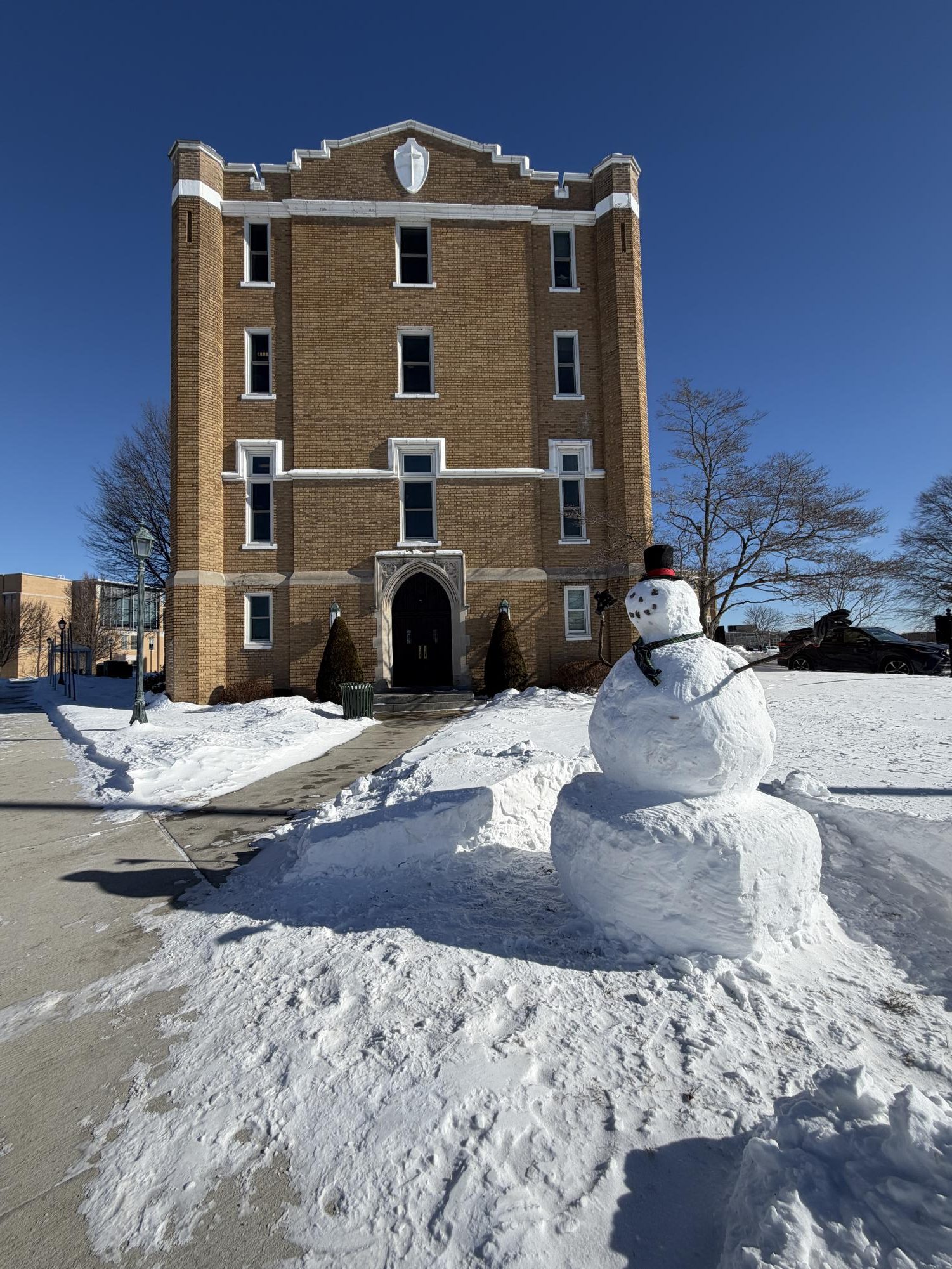
The campus is completely covered in snow, which makes leaving dorms and going to class even more difficult. Few students said hey enjoy trudging through the frozen tundra.
“Especially because it’s dangerous when it snows. Obviously, you don’t want to slip and get hurt on the snow in addition to it being cold,” said Peregrim.
Pardue especially struggles with the snow because of living in a townhouse and therefore having to walk up the large hill on the ice and snow to get to class.
“It’s definitely a further walk. and there’s not really a pathway that’s shoveled so my shoes get all wet. I even have to drive. which means I waste gas money,” Pardue said.
Blake has also noticed students being less sociable with each other and not participating much during class.
“I do wish people would talk more. I don’t feel like there is a lack of engagement, and I try to ensure that,” said Blake.
As an educator, however, she understands the struggles winter can bring upon students.
“The weather affected me so I can’t imagine it doesn’t affect students too, and I try to be alert to that,” Blake said.
Mental health is something to be taken seriously especially during the winter months, Galvez said.
“We’re feeling unmotivated. We tend to try to motivate ourselves with self-criticism. I will always tell everybody self-compassion is probably the best bet for us to use especially in the winter month,” said Galvez.
It is very important during these months to communicate and support friends, too.
“You’re kind of the best gauge of how your friends are feeling because you spend a lot of time together. It’s okay for you to do a little check in,” Galvez said.
Resources like the CAPS center are always available if students are feeling overwhelmed and need someone to talk to.
“We do offer drop-in sessions so those are 30-minute sessions that students are allowed to come in and just kind of throw it all out,” Galvez said, “We also have a counselor on call so that is an option that is free to all students.”
Students in need can reach out to counselors on campus to book a session even if they aren’t familiar with therapy.
“The drop-in hours were created as a 30-minute session for students who might be a little anxious about starting therapy or not educated on what therapy looks like, so it’s a nice quick introduction session,” said Galvez.
Art therapy sessions are also provided to get emotions out in an artistic manner. They are held Wednesdays at 2:00 p.m. and Thursdays at 10:00 a.m.
“We always tell you guys you have all these support services on campus. It’s about making sure you’re connecting with them,” Galvez said.