

Campus transforms in the spring with the temperature increase, as perennials bloom and workers introduce new plant species.
Campus grounds staff introduce new shrubs to the doorways around building, changing the look of these commonly trafficked places. Crews select shrubs and flowers according to color.
First year mass communications and design major Liv Smith said yellow, blue, and white are ideal as they incorporate the school colors.
“I like the flowers that are planted around campus. It really gives a good atmosphere, a welcoming atmosphere,” Smith said.
Project, Grounds and Facilities Manager Laurie Finnegan said the only exception to this spirited rule can be found at the water feature in front of Banks. The species there are picked to attract pollinators to help keep campus life thriving, she said.
“The campus plants are limited to what grows well in the Northeast Pennsylvania growing zone, which is where the temperature can get as low as -15 degrees Fahrenheit,” Finnegan said.
Campus grounds staff also use trees strategically to block out elements, separate them or to make a statement.
“We used white pines, columnar spruce, and weeping Norway spruce to soften up the river stone landscaped beds around McGowan Hall. These trees are unique and will continue to create an amazing landscape as they grow,” said Finnegan.
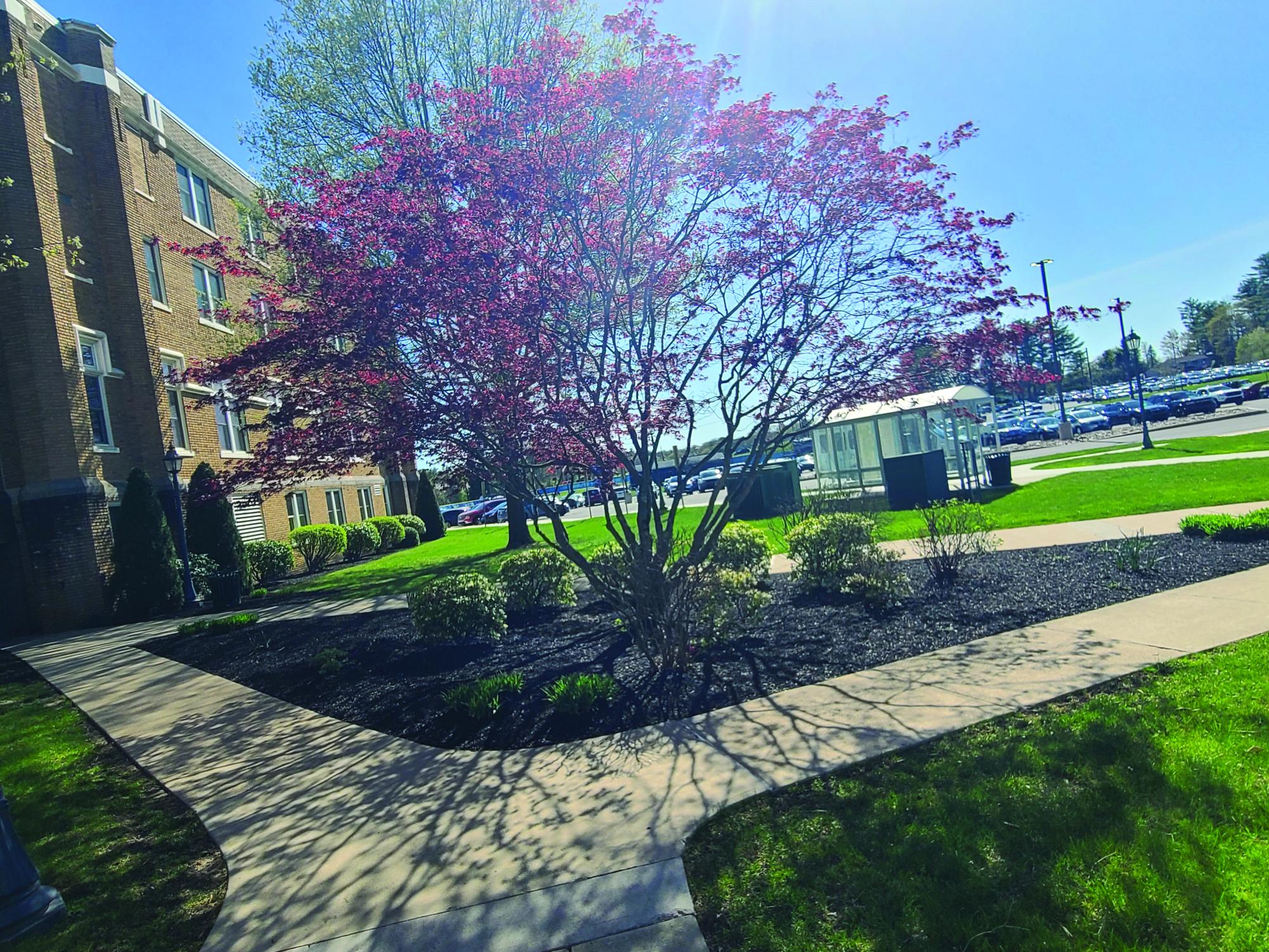
Finnegan said incorporating specific species of trees and shrubs enables the landscape to perform year after year while also offering utility. Finnegan said part of the science of landscape design is plant hardiness for space.
“Keeping these tree species healthy can be expensive because there are some issues that will kill them. Some examples of tree health treatment are emerald ash bore injections on ash trees, bleeding canker treatment on beech trees, bark beetle injections for the Norways, and treating our hemlock for wooly adelgid,” said Finnegan.
However, building and maintaining a landscape involves many different aspects that a grounds manager cannot control.
“The hardest part about my job is not being able to control the weather!” Finnegan said.
Despite the many species and the large number of plants around campus, staff use sustainable watering practices by only watering plants that need it. Crews don’t water some plants, such as trees or other in-ground plants, unless there is a drought.
As the temperatures continue to rise, the trees through the arch to Mercy Hall start to bloom, creating a scene that Finnegan finds amazing, not only in the spring.
“When the Iris bloom at the arch in the spring, they are beautiful. The Eastern White Pines along the main drive are amazing, and the length of sidewalk from MacDowell Hall to Gildea Hall, lined with maple trees, is the best place on campus in the Fall, “Finnegan said.
Finnegan said a beautiful entrance is one of her primary focuses. Sophomore speech language pathology major Kayla Marsicanto said all of the gardening toil is worth it.
“When we get back to campus after summer break, the campus slowly starts to fade into fall, with the trees changing from green to orange, yellow, and red,” she said.
Sophomore mass communications and design major Jordyn Jarrett said the stunning landscape was one of the first things she noticed about the university.
“One time we were outside playing basketball, and there were a lot of people out there, and I was running around barefoot. It was also really nice and pretty outside.”
Five people currently care for the grounds: Matt Werner, Jeff Dowling, Rich Walker, Mike Stanko, and Scott Bonar.
“These guys take pride in their work and do an excellent job, and their efforts are evident throughout the year!” said Finnegan.